
Arrest History in Multnomah County
MCSO books adults arrested by the sheriff, Portland Police, Gresham Police, Oregon State Police, Port of Portland Police, campus officers, and other agencies when the jail accepts custody. The arresting agency owns the police report. MCSO owns the booking file. That distinction determines where a request goes.
An arrest history can show custody events over time, but public PAID results are built for present or recent custody. They are not a lifetime conviction report. A release, citation, declined charge, or missing online result cannot establish that no arrest occurred.
Four Multnomah Arrest Records
One event can create four records. An officer writes an incident or arrest report. MCSO creates intake, fingerprint, classification, charge, and release data at the Multnomah County Detention Center. OSP may add fingerprint-linked arrest data to Oregon criminal history. If prosecutors file, Circuit Court creates a case number and docket.
Those records can disagree without any one being false. A booking charge states the basis for custody. The prosecutor may amend or decline it, while the court records the adjudicated result. Reporting delays also matter. Compare identifiers and dates instead of expecting identical labels.
How to Look Up Multnomah County Arrests
The official MCSO Public Access to Inmate Data search is the first stop for current custody. Use exact name spelling. When it fails, move through the complete chain rather than treating the blank result as an answer.
- Search PAID by last and first name for recent booking or custody status.
- Call MCDC at 503-988-3689 or Inverness at 503-988-5060 if intake or release data is unclear.
- Request the report from the arresting agency and booking material from MCSO through GovQA.
- Search OJD for filed charges and the final court outcome.
- Use OSP for an Oregon repository record and ODOC for sentenced state custody.
MCSO Booking Search and Jails
The MCSO corrections hub routes readers to PAID and custody services. MCDC at 1120 SW Third Avenue is the primary booking and release facility. Inverness Jail at 11540 NE Inverness Drive is a lower and medium security facility. A transfer between them does not mean a second arrest.
PAID exposes last-name and first-name search controls. Results should be read for identity, booking or custody identifier, date, facility, status, charges, and release or bail details when public. Intake, classification, medical, calls, and video are not all online.
The official sheriff homepage identifies the agency that holds Multnomah County booking records.
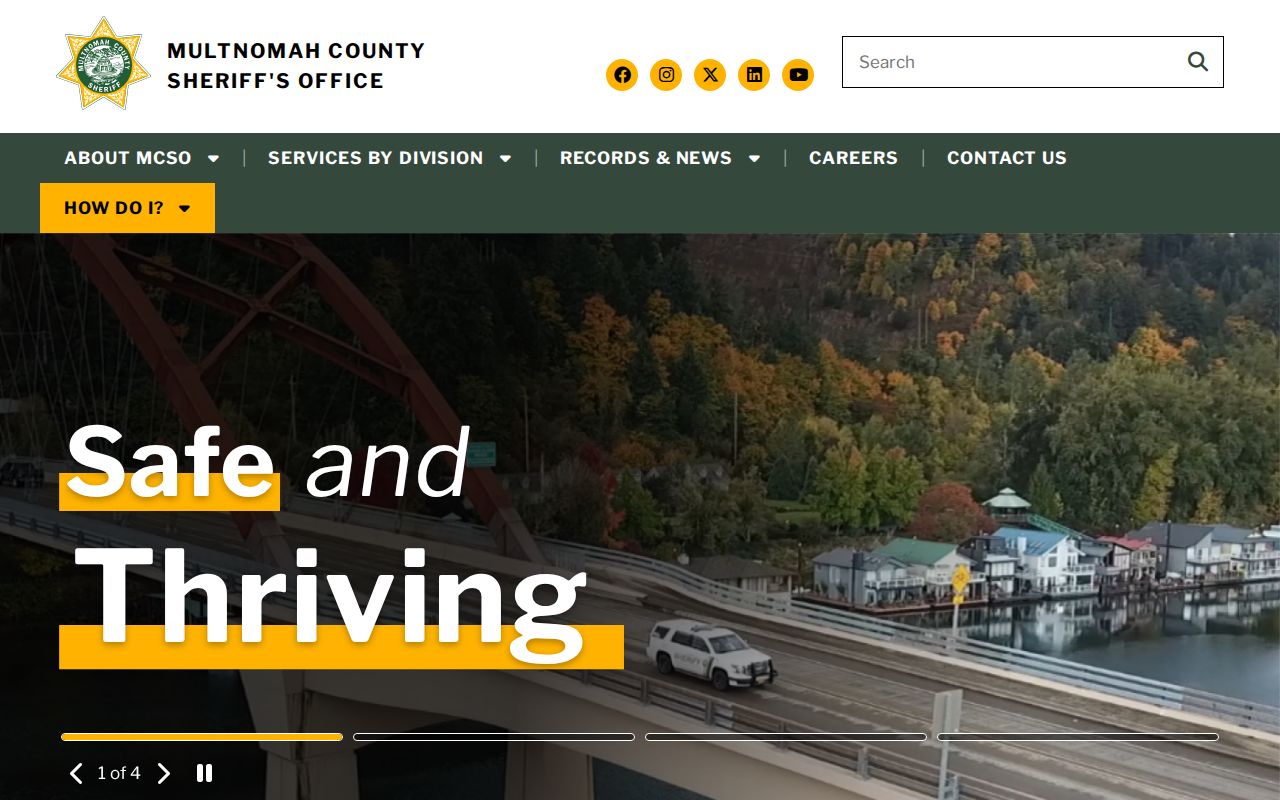
Its corrections and request links provide the public fallback when PAID is incomplete.
What an Arrest Record Shows
An agency report explains the officer's account, while the booking record documents jail intake. Neither proves guilt. Confirm the person with more than a name and read public charges as allegations unless a court disposition resolves them.
| Booking Number | Jail intake identifier |
|---|---|
| Booking Date & Time | When MCSO accepted custody |
| Arresting Agency | Office that created the police report |
| Charges | Custody allegations, subject to change |
| Bond | Public release terms where displayed |
| Booking Photo | A separate MCSO record that may be requested |
| Release Status | Current custody or release information |
Request Multnomah Booking Records
Use the Multnomah County Public Records Request Center and select Sheriff's Office. The account tracks messages, invoices, payment, and downloads. Requesters who cannot use the portal may contact the custodian or submit the county form by mail or in person. Identify the agency, booking or report number, date range, location, and record type.
MCSO lists police and arrest reports, custody status, charges, booking photos, intake forms, classification, property, jail calls, and video among potentially requestable records. Exempt investigative, medical, victim, security, juvenile, and personal data may be withheld or redacted. Ask for segregable public portions and the cited exemption.
MCSO Public Records
Communications Unit
501 SE Hawthorne Blvd., Suite 350
Portland, OR 97214
503-988-7300
Recent Arrests and Booking Logs
PAID is Multnomah County's public booking and inmate channel, not an arrest gallery. It can show custody, charges, and release data for a recent admission. A record may lag during intake, change after release, or disappear from a current-custody view. Call the jail and use a focused records request if a known booking is absent.
Bail and release details change fast. MCSO directs questions to 503-988-3689. In-person bail may be accepted at the Justice Center lobby, while separate self-bail options can apply. Confirm live instructions before payment and never treat release as a finding on guilt.
VISOR supplies custody-status notification across county and state facilities. It is separate from PAID. Neither replaces an OJD case search, because the court decides and records the filed charge and outcome.
County Jail or Oregon Prison
PAID answers local pretrial and recent county custody. The Oregon Offender Search answers sentenced ODOC custody. A person can leave the county jail after transfer to state prison, so a blank PAID result may call for the state locator. Certified ODOC records require the agency's request route.
The official ODOC locator entry explains that statewide custody layer.
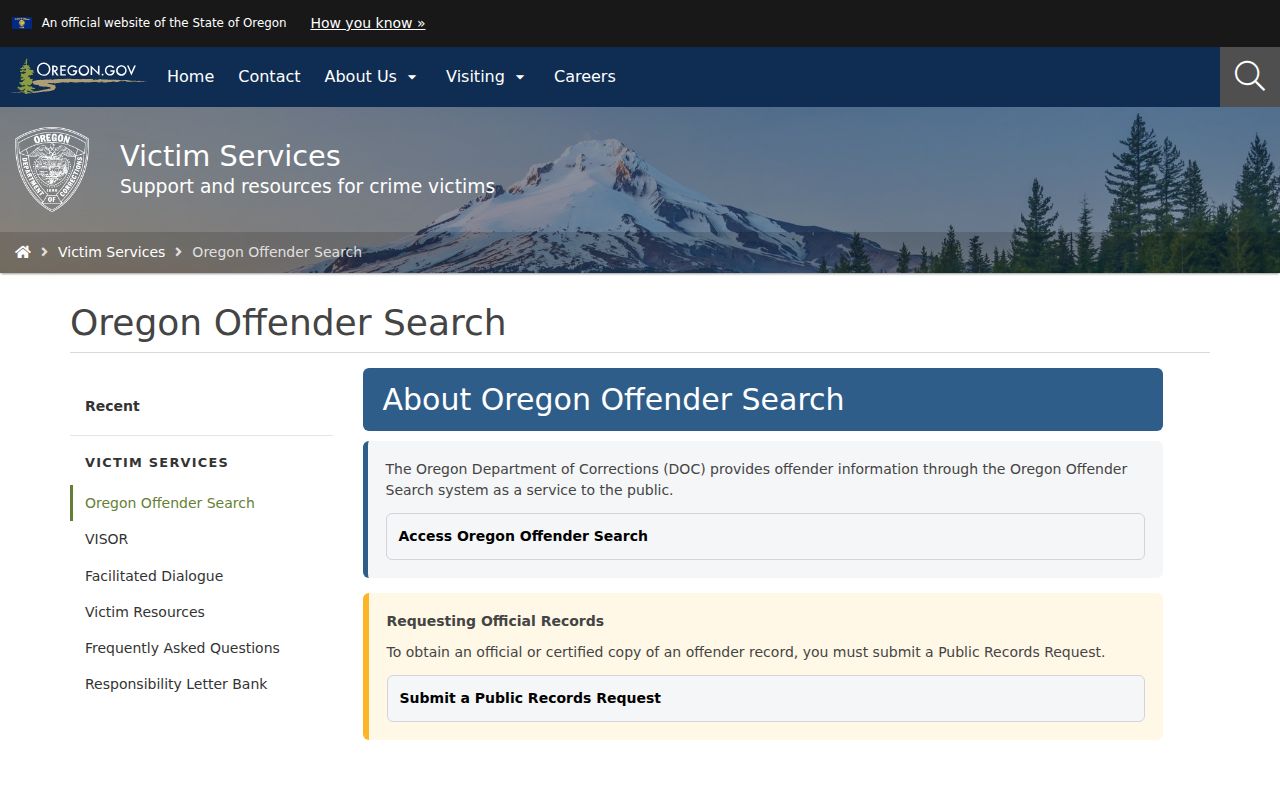
Use it only for correctional status, then return to OJD for the judgment.
Arrests vs Convictions
An arrest documents custody or a seizure by law enforcement. A conviction follows a guilty plea, no-contest plea, or verdict and judgment. Multnomah County police and MCSO create the first kind; Oregon courts create the second.
| Arrest Record | Conviction Record |
|---|---|
| Police agency or jail creates it | Court enters it |
| Shows an arrest or booking happened | Shows guilt was adjudicated |
| Lives with agency and MCSO | Lives with court and may reach OSP |
| May lead to release or no filed charge | May lead to sentence, appeal, or set-aside |
Note: An arrest is not proof of guilt; a booking may produce no charge or end in dismissal or acquittal.
When Multnomah Booking Is Missing
A citation may create a police record without jail intake. County deflection may route an eligible contact to services rather than arrest. An intake may not yet be posted, a name may differ, or an arrest may be federal. Check the arresting agency, both jail phone lines, the court, and the relevant state or federal system.
Agency geography is another common cause. Portland Police reports stay with Portland's records unit. Gresham incidents go to the city. Troutdale law enforcement is provided by MCSO, so the sheriff's request route applies. Fairview has its own police and records pages, while state-highway events may belong to Oregon State Police. Airport and marine-terminal incidents may belong to Port of Portland Police. Ask who created the report before filing a request.
Warrant information can also appear without a current booking. A bench warrant belongs to the court case, while law-enforcement warrant data may require the sheriff or issuing agency. If resolving one's own warrant, confirm it with the court or agency and obtain legal help. Do not rely on a third-party people-search result.
OSP's public name check is Oregon-only and narrower than a person's fingerprint-based copy of their own record. It can report recent arrests without a disposition for one year and older convictions under its statutory rules. The other-person product requires a full name, birth date, and current or last-known address, costs $33, and uses a statutory notice and waiting process. A person seeking their own complete Oregon record submits the OSP form with fingerprints and the $33 fee. Neither product is a substitute for MCSO's booking file.
County request timing follows Oregon Public Records Law. The county generally acknowledges a request within five business days, subject to statutory exceptions, and then completes it as soon as practicable without unreasonable delay. Staff may estimate actual research, retrieval, and copy costs and require advance payment. Narrow dates, record types, locations, and identifiers reduce search work. If material is withheld, request the public, redacted portions and the legal basis for the denial.